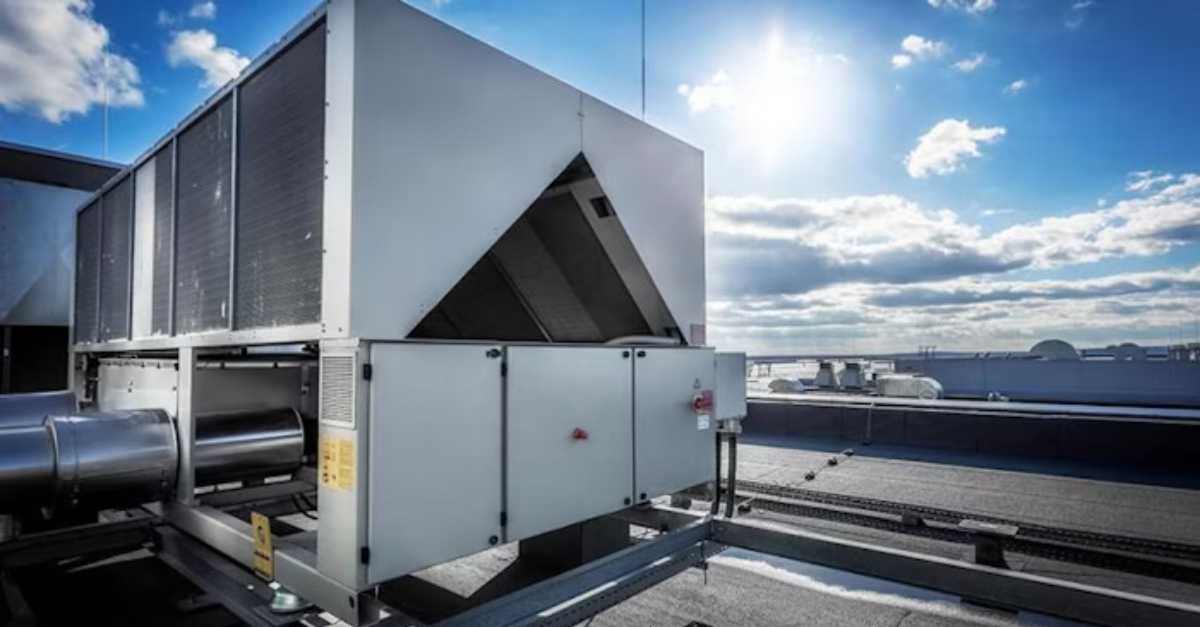
For years, refrigerant management has largely been managed at the site level. This created inconsistencies across locations with records maintained locally and compliance efforts handled independently. Issues rarely get elevated beyond operations and oftentimes only when it becomes an urgent problem.
Now, expanding regulations and audits, rising refrigerant costs and growing operational pressures are transforming how you need to approach refrigerant management. Compliance has turned into a portfolio-wide challenge and the decisions you make at one location can have serious and direct implications across your full organization. To support business continuity, refrigerant management must become a strategic discipline, which means you need more visibility and control. Even as regulations evolve or relax in some regions, operational pressure and financial exposure continue to rise.
This article explores macro trends and evolving regulations that affect refrigerant management at individual facilities environments and across dispersed locations, discussing how this is causing traditional models to fail and what the industry needs in order to stay ahead.
3 Macro Trends Driving Refrigerant Management Risk
Refrigerant management challenges aren’t solely driven by environmental regulations. There are broader economic and geopolitical events adding strain to supply chain costs and availability, heightening the operational consequences of refrigerant-related decisions. The following three macro trends play a direct role in rising costs and risks for commercial facilities managers in charge of refrigerant compliance.
For many organizations, refrigerant is shifting from a routine consumable to a constrained operational resource.
1. Supply constraints are structural, causing sustained scarcity
Global HFC phase-down efforts are accelerating, intentionally constraining refrigerant availability via quotas and regulations. At the same time, next generation alternatives increasingly come with a larger price tag and sourcing complexities. What this means is that you can’t treat refrigerant as a routine maintenance expense anymore. Especially if you have a multi-site portfolio. Every pound must be viewed as a resource requiring greater visibility, forecasting and control to avoid compliance risks as well as operational disruptions and higher costs.
Refrigerant is no longer just more expensive; it is becoming a constrained resource, where availability itself can impact service timelines and operational continuity.
2. Geopolitics is a direct cost driver
Geopolitical events are often viewed as external market forces that usually have limited impact on day-to-day facilities operations. In reality, global conflicts disrupt both energy and chemical supply chains, driving higher energy and freight costs, plus tighter availability of chemical inputs. In fact, recent supply chain disruptions due to political conflicts are increasing cost-to-serve by an average of up to 40 percent. This leads to greater uncertainty around the cost and availability of refrigerants, replacement parts and service resources, putting you at risk for project delays and longer repair timelines, both of which create higher operating costs.
3. Retail economics are under increasing pressure
The cost pressures you’re likely experiencing aren’t happening in isolation. Refrigerant prices for retail applications increased more than 300 percent over the last seven years and stores are spending an average of $10,000 per year on replacing leaked refrigerant alone. What can look like a simple maintenance issue at a single location grows into a material operating expense when you multiply it across dozens or hundreds of sites. Refrigerant management is now a financial discipline just as much as a compliance requirement and it has direct effects on uptime in addition to long-term planning and profitability.
Regulatory Expansion is Causing Traditional Approaches to Fail
There is a widening gap between compliance complexity and the tools you use to manage that. As rules become stricter, it means more systems, more requirements and more fragmentation. For example, under the AIM Act, EPA 608 guidelines became more stringent for refrigerant management as of January 1, 2026. On top of these new EPA requirements, lower reporting thresholds and more aggressive state-level mandates mean all organizations are fully exposed, even smaller and single site operators. You’re left navigating a patchwork of requirements for different rules, timelines and thresholds across locations.
Risk is no longer isolated to a single incident and that further compounds the growing complexity that may be causing your current approach to fail. One missed inspection, one undocumented leak, one incomplete service record, even if specific to a single location, can create a ripple effect causing broader exposure. With fines exceeding $60,000 per violation, per day the real risk becomes a systemic lack of control across your portfolio. Not to mention, something like repeated leaks can also carry heavy financial consequences as it often forces early equipment replacement and capital spend.
Most organizations still rely on site-level tracking with manual processes and spreadsheets. This reduces portfolio-wide visibility into site specific maintenance and asset lifecycle health, causing audit preparation to be reactive. Too many manual processes can lead to more errors in reporting, and the limited visibility may mean noncompliance can happen before you even realize it. Your traditional compliance model breaks down because it can’t scale across locations, it struggles to keep pace with evolving regulations and audits and it depends too heavily on inconsistent human processes.
For large, multi-site organizations, this is driving a shift toward centralized, enterprise-level programs to reduce exposure and standardize compliance.
The Fundamental Shift to Portfolio-Wide Refrigerant Management
A modern approach to refrigerant management is taking shape. Rather than rely on periodic checks or location-specific processes, there’s now a marked shift towards technology that provides centralized visibility across all equipment, sites and service activity. Standardized processes and oversight across locations as well as service providers gives a clear view of usage and leaks along your entire portfolio, so you have a better understanding of your risk exposure.
What allows you to operate at scale is the ability to conduct continuous monitoring, leverage standardized processes and get proactive alerts tied to regulatory thresholds. Technology plays a critical role helping you centrally track activity like refrigerant usage and leaks, with capabilities that automate reporting aligned with regulatory requirements and frameworks, so you maintain audit readiness at all times.
Refrigerant compliance is becoming a continuous and data-driven discipline and requires the ability to monitor performance and risk across the full lifecycle of all your assets and locations. This way you have greater control over operational performance and risk.
Download: Accruent Sustain for Refrigerant Management
Prepare Your Portfolio For the Next Era of Refrigerant Compliance
The question you need to ask yourself is shifting from “Are we compliant today?” to “Are we able to stay compliant as regulations continue to change and expand?” It’s imperative that you be prepared for what’s coming next and how the regulatory environment will evolve. Multi-site operators need a system that can scale refrigerant management and compliance with more consistency, visibility and control across every location. The next step is to establish a system that can aggregate data, enforce standardization and provide real-time insight so you can get out ahead of new and emerging risks, not just to maintain compliance, but to protect operational continuity and control costs in an increasingly constrained environment.
If you’re ready to make refrigerant management a portfolio-level strategy, learn more about Accruent Sustain today.
.svg)