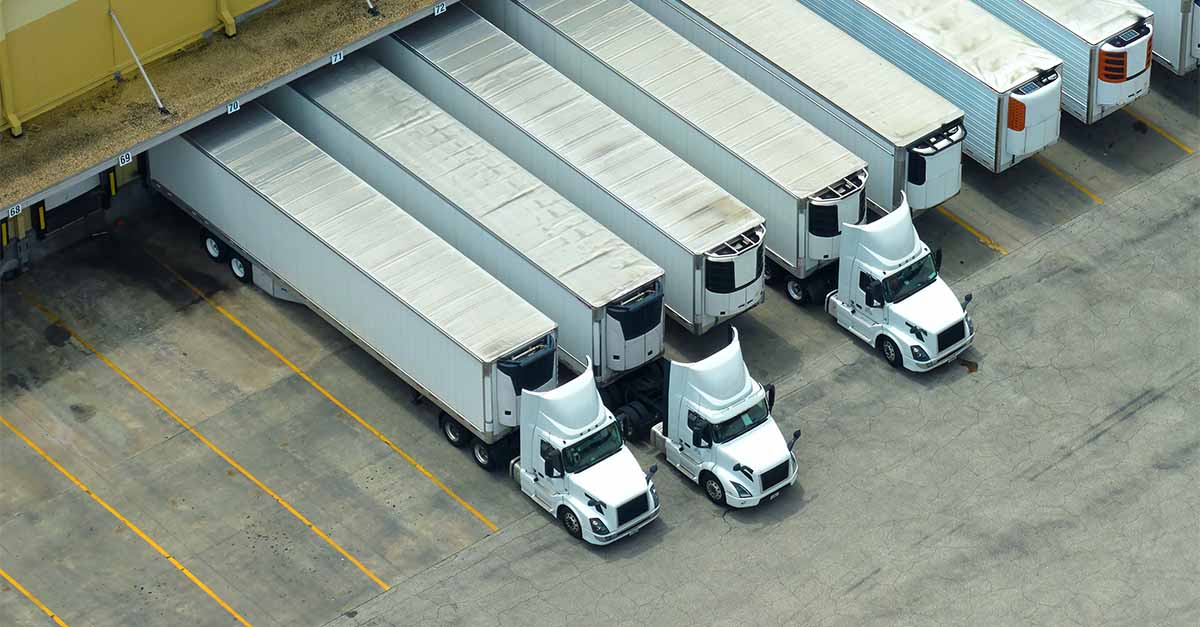
Fleet maintenance management is a challenge every vehicle fleet manager knows all too well: A truck breaks down unexpectedly, derailing schedules and inflating costs. What should have been a half-day fix turns into a multi-day headache, draining time and resources.
As commercial vehicles become more complex and maintenance demands increase, managing fleet maintenance manually is no longer practical. Fleet maintenance software offers a smarter, more proactive solution — delivering real-time data, preventive care, and streamlined operations to keep your business running on schedule.
What is Fleet Maintenance Management?
Fleet maintenance management is a strategy a company uses to organize and oversee the maintenance and repair of its fleet of vehicles or equipment. It covers tasks like tracking performance, scheduling regular maintenance and organizing timely repairs. These processes reduce the risk of breakdowns and ensure equipment stays reliable.
Maintenance management is distinct from general fleet management. While general fleet management includes route planning and driver coordination, fleet maintenance management focuses on vehicle upkeep. Its primary goals are preventive maintenance and repair optimization. These strategies help extend asset lifespan and lower overall repair costs.
Industries that rely on heavy machinery or high-use vehicles depend on structured maintenance processes to stay operational. Manufacturing, logistics, construction, utilities and field service organizations cannot afford unexpected downtime. To manage this complexity, many organizations use fleet maintenance software, such as a computerized maintenance management system (CMMS). These systems centralize maintenance data, automate preventive schedules, streamline work orders and help ensure compliance with safety and regulatory standards.
The Importance of Fleet Preventive Maintenance
Fleet preventive maintenance is a proactive maintenance strategy that involves servicing vehicles and equipment at scheduled intervals based on time, mileage, engine hours or usage. Instead of waiting for breakdowns, organizations perform routine inspections, part replacements and system checks to prevent failures before they occur.
The key benefits of prioritizing fleet preventive maintenance help organizations to:
- Reduce unplanned downtime: Scheduled inspections and service intervals help detect wear before it turns into breakdowns. This keeps vehicles operational and protects revenue streams.
- Decrease total cost of ownership: Preventive maintenance reduces emergency repairs, minimizes secondary damage and extends asset lifespan. Over time, this lowers overall maintenance and replacement expenses.
- Improve compliance and audit readiness: Maintenance records, inspection histories and service documentation must be accessible and accurate. A centralized system helps organizations meet safety and regulatory requirements with confidence.
- Increase asset visibility: With a computerized maintenance management system, teams can track asset performance, automate work orders and monitor maintenance history across the fleet.
- Expand operational reliability: Well-maintained vehicles perform more consistently, improve fuel efficiency, and reduce service disruptions that impact customers and field teams.
- Enable data-driven maintenance decision-making: Fleet maintenance software provides insights into recurring failures, cost trends, and asset condition. This enables smarter repair-versus-replace decisions.
Organizations that neglect preventive maintenance often face escalating repair costs, safety risks, and operational disruptions. A proactive fleet preventive maintenance strategy, supported by a CMMS like Accruent Maintenance Connection, transforms maintenance from a reactive burden into a strategic advantage.
Which Industries Use Fleet Maintenance Management?
Fleet maintenance management supports organizations that rely on vehicles, mobile equipment, or operational fleets to deliver services and maintain productivity. Any industry where uptime, safety, and asset reliability are critical can benefit from a structured fleet maintenance program.
Industries where fleet maintenance management plays an essential role:
Construction
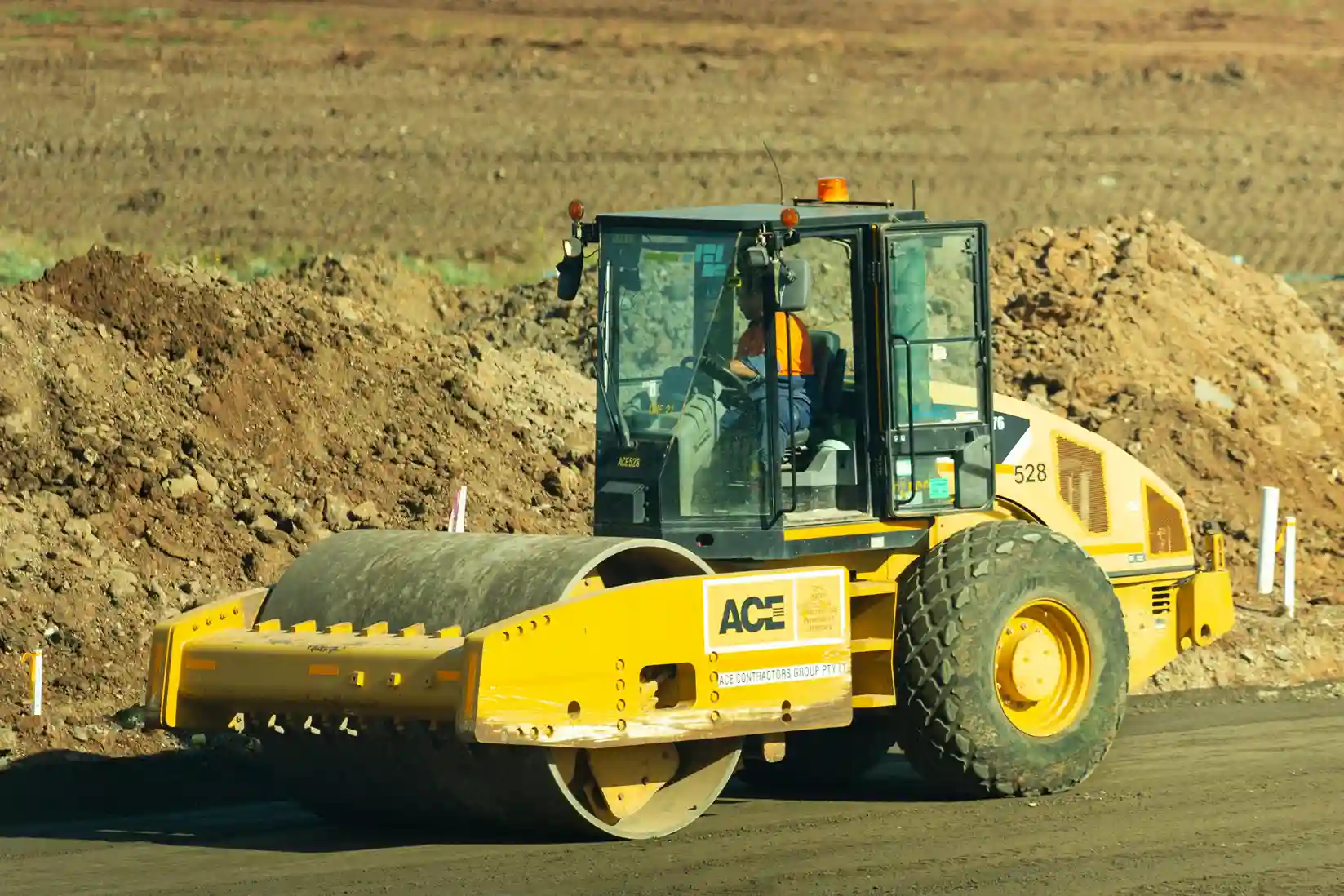
Construction firms rely on heavy machinery and service vehicles that operate in demanding environments. Regular inspections and preventive maintenance help avoid equipment failures that can delay projects.
Government and municipal agencies
Public sector organizations operate diverse fleets, including emergency vehicles and public works equipment. Structured maintenance programs improve accountability and regulatory compliance.
Healthcare
Ambulances and medical transport vehicles must remain operational at all times. Fleet maintenance management helps maintain readiness and reduce the risk of unexpected breakdowns for healthcare industries.
Logistics and transportation
Companies operating delivery trucks, freight vehicles, and distribution fleets depend on consistent vehicle performance to meet delivery schedules. Maintenance disruptions can delay shipments and affect customer service.
Manufacturing and industrial operations:
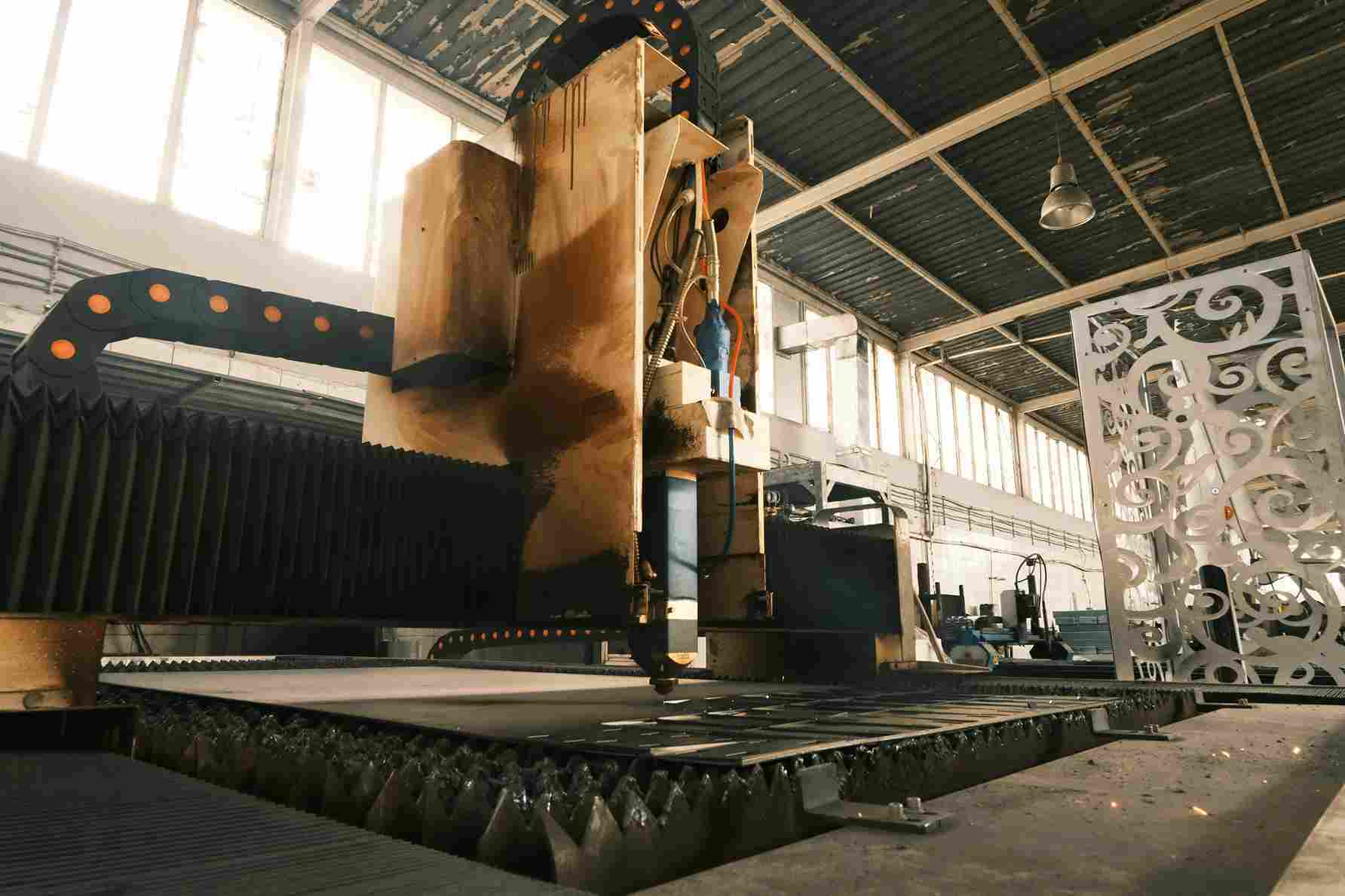
Manufacturers use internal fleets such as forklifts, yard trucks, and mobile support equipment to maintain production flow. Reliable fleet operations reduce safety risks and minimize operational interruptions.
Mining
Mining operations depend on heavy mobile equipment and support fleets that work in harsh, high-demand environments. Structured fleet maintenance helps improve equipment reliability, support compliance, and reduce unplanned downtime across critical operations.
Oil & Gas
Oil and gas companies rely on fleet vehicles and mobile equipment to support field operations, inspections, and maintenance across distributed sites. Fleet maintenance management helps reduce downtime, strengthen safety and compliance, and keep critical operations running efficiently.
Utilities
Utility providers and field service organizations manage distributed fleets that support essential services. Preventive maintenance helps ensure vehicles remain safe, compliant, and operational across multiple locations.
Benefits of Fleet Maintenance Management Software
Fleet maintenance software reduces costs, prevents downtime and improves reliability. It automates tasks and provides real-time insights, helping businesses keep operations running smoothly.
For companies relying on vehicles or equipment, these benefits make it a valuable tool:
Cost Reduction
Saving money starts with fewer surprises. Optimized maintenance schedules lower repair costs and extend vehicle lifespans. Studies show that preventive maintenance can increase equipment lifespans by 20%, which is a money saver in the long term. With fleet maintenance software, businesses can catch problems early, avoid expensive breakdowns, and maximize their assets.
Increased Uptime and Reliability
Keeping your fleet on the move keeps your business on track. If things go down, it costs time and money. Research shows that unplanned downtime now costs Fortune 500 companies 11% of their yearly turnover — nearly $1.5 trillion.
Addressing maintenance needs proactively reduces downtime and keeps vehicles running reliably. Fewer disruptions mean smoother operations, consistent production and better bottom-line results. Reliable equipment drives reliable business outcomes.
Enhanced Compliance and Positive Inspection Outcomes
Staying compliant keeps your fleet moving. Maintenance software tracks inspections, certifications and safety checks, making it easier to manage regulatory requirements.
Keeping ahead of deadlines and organizing records helps businesses avoid penalties and maintain smooth operations. Reliable compliance processes lead to better inspection outcomes and peace of mind.
Data-driven Decisions
Better data means better decision-making. Fleet maintenance software collects and analyzes performance metrics, helping managers plan budgets, allocate resources, and optimize fleet size.
Knowing these trends and spotting inefficiencies helps decision-makers make informed choices that save money and improve operations. With actionable insights, every decision drives better results.
What are the Key Features of Fleet Maintenance Management Software
Fleet maintenance management software is designed to simplify the upkeep of vehicles and equipment. It provides tools to automate routine tasks, track performance, and reduce downtime. These features allow businesses to operate more efficiently while cutting maintenance costs.
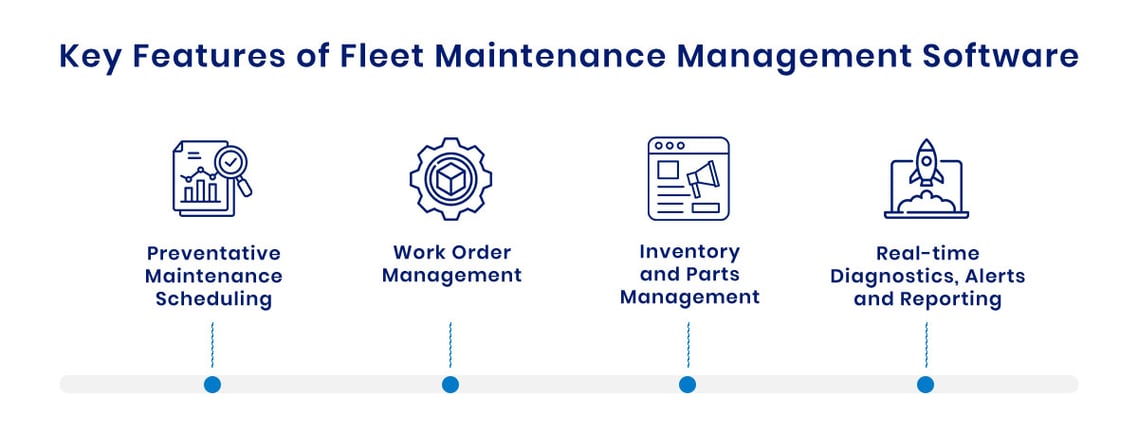
Preventive Maintenance Scheduling:
Automated scheduling helps vehicles and equipment stay in good condition by planning maintenance before issues arise. The system uses data to set service reminders and identify potential risks. This proactive approach reduces unexpected breakdowns, lowers repair costs, and keeps operations running smoothly without downtime.
Work Order Management:
Efficient work order management simplifies the tracking and organization of maintenance tasks. The software centralizes work orders, making assigning, monitoring, and completing jobs easy. This feature reduces confusion, prevents missed tasks, and improves team productivity. By streamlining workflows, businesses can address maintenance needs quickly and keep operations on track.
Inventory and Parts Management:
Managing inventory and parts keeps maintenance operations efficient. The software tracks stock, flags low inventory, and reorders parts as needed. It prevents delays caused by missing components and avoids overstocking. Maintenance teams stay ready with the right parts on hand, eliminating downtime and keeping operations on schedule.
Real-time Diagnostics, Alerts and Reporting:
Real-time diagnostics identify issues as they happen, allowing maintenance teams to act quickly. Alerts notify staff of potential problems before they escalate, reducing downtime and repair costs. The software also analyzes fleet data, providing actionable insights. Managers use these reports to make better maintenance schedules and resource allocation decisions.
Challenges of Fleet Maintenance Management
Managing a fleet comes with its share of obstacles. According to Gartner, 30% of fleet managers still do things manually. High costs, complex operations, and strict regulations are a disaster waiting to happen. Plus, staying organized and efficient becomes even more challenging without the right tools.
High Upfront Costs and Budget Constraints:
Fleet maintenance software requires an upfront investment, which can be daunting. Businesses pay for licensing, setup and integration, which can strain resources and budgets. These costs may seem high, but the long-term savings often justify them.
Regular maintenance reduces expensive repairs. Proper care also extends the life of vehicles. Businesses spend less on replacements and emergency fixes, balancing the initial expense with measurable savings over time.
Complexity of Managing Diverse Fleets
Vehicles have different maintenance needs based on type, size and age. Manually managing these variations creates inefficiencies and increases the risk of missed maintenance.
Fleet maintenance software simplifies this process. Customizable modules help track and schedule maintenance for each vehicle type, ensuring every asset gets the attention it needs to stay reliable.
Downtime and Operational Delays
Unexpected breakdowns can derail operations and cause costly delays. Vehicles out of service mean lost productivity and missed deadlines, which are detrimental for everyone.
Fleet maintenance software addresses this by providing real-time alerts about potential issues. You can track maintenance schedules to prevent surprises. Managers can identify problems early, plan repairs, and keep the fleet running smoothly. Using predictive maintenance software to limit unplanned downtime helps maintain consistent operations and avoid unnecessary disruptions.
Compliance with Regulatory Standards
Keeping up with safety and environmental rules is no small task. Missed inspections or expired certifications can halt operations and lead to fines. Manually managing these requirements risks errors and overlooked deadlines.
Fleet maintenance software keeps everything in check. It tracks inspections, organizes certifications and flags upcoming deadlines. Managers stay ahead of compliance tasks without extra effort. The result? A fleet that’s ready to pass inspections and keep running without interruptions.
Poor Inventory and Parts Control
Running out of critical parts can halt maintenance. On the other hand, overstocking leads to wasted resources and higher costs. Balancing inventory manually often results in errors and inefficiencies.
Fleet maintenance software takes the guesswork out of inventory management. It tracks stock levels, flags low supplies, and automates reordering. Parts stay available when needed, but you can avoid waste. Maintenance teams get what they need without delays, keeping operations on schedule and costs under control.
How Maintenance Connection Supports Fleet Maintenance Management
As a robust CMMS, Maintenance Connection offers tools to simplify fleet maintenance and improve operational efficiency. Integrating preventive maintenance, inventory management, and work order tracking reduces downtime and extends the lifespan of vehicles. Here’s how it aligns with fleet management goals:
- Automates Maintenance Schedules: Plan and track preventive maintenance to avoid costly breakdowns.
- Centralizes Work Orders: Manage assignments and track completion in one organized system.
- Monitors Vehicle Health: Real-time diagnostics keep your fleet running smoothly.
- Manages Inventory: Tracks stock levels, reduces waste, and avoids supply delays.
- Supports Compliance: Tracks certifications and inspection deadlines, ensuring vehicles meet regulatory standards.
With these features, Maintenance Connection transforms fleet maintenance into a proactive process. Businesses save time, reduce costs, and keep operations running without interruptions.
Ready to take control of your fleet maintenance? Contact us today and learn how Accruent Maintenance Connection can transform your operations.
.svg)